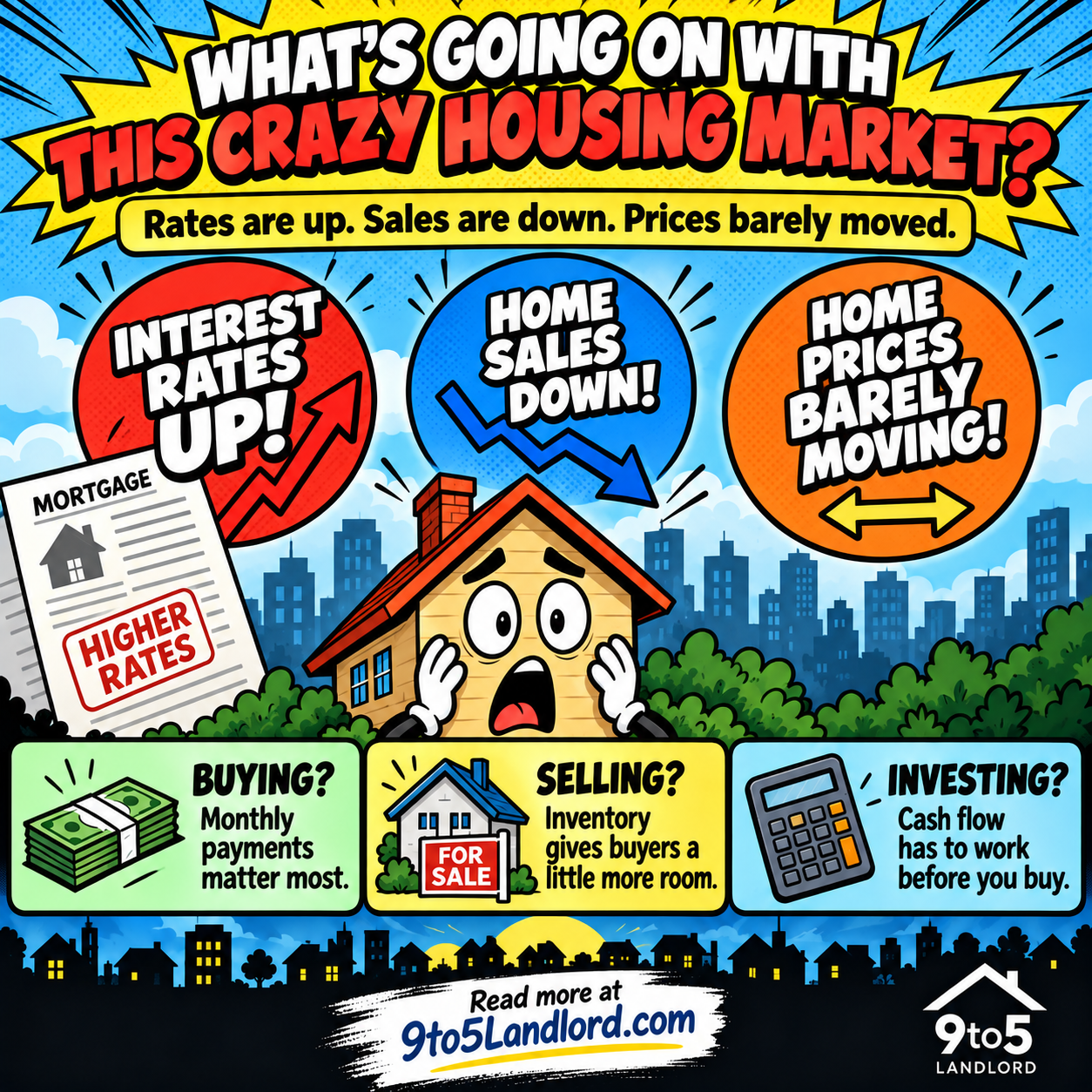
Interest rates are up. Home sales are slowing. There are more houses for buyers to choose from.
So naturally, home prices should be falling, right?
Not exactly. Welcome to the 2026 housing market.
The numbers are starting to tell a strange story. Mortgage rates are hovering around 7%, home sales are down, and inventory is finally improving. Yet home prices nationally are still slightly higher than they were a year ago.
And here in Ohio, prices have been even more stubborn.
So what does all of this actually mean if you're trying to buy a house or invest in real estate?
First, Let's Look at the Numbers
Freddie Mac reported the average 30-year fixed mortgage rate at 6.95% on September 17, up from 6.76% just one week earlier.
The Federal Reserve also raised its benchmark federal funds rate by a quarter percentage point on September 16.
It's important to understand that the Fed does not directly set mortgage rates. Mortgage rates are influenced heavily by the bond market, inflation expectations, economic conditions, and investor demand.
But the result for someone trying to buy a house is pretty simple: Borrowing money is expensive right now.
At the same time, the National Association of Realtors reported that existing-home sales fell 2% in August from the previous month. Inventory increased to about 1.62 million homes, giving buyers about 4.9 months of supply.
But the national median home price still increased 1.6% compared with last year, reaching $429,100.
That's the weird part. Higher rates have slowed demand, but they haven't caused prices to collapse.
Ohio Is Even More Interesting
This is also why I don't put too much weight on national headlines when I'm looking at real estate in Northwest Ohio.
According to Ohio REALTORS, Ohio had 11,718 home sales in August, down 4.2% from a year earlier.
But Ohio's median sales price increased 4.4%, from $268,000 to $279,900.
Ohio REALTORS also reported 39,168 new listings statewide, up 1.9% from a year earlier. That is a new-listings figure, not the number of active homes for sale.
So we're seeing a similar pattern here: Fewer sales. More new listings. Higher prices.
That's not exactly what you would expect if you only listened to people saying higher interest rates are going to make housing prices crash.
Real estate is local, and supply still matters.
Why Haven't Prices Fallen More?
The short answer is supply.
Even though national inventory has increased, we're not suddenly swimming in houses. Ohio had about 3.67 months of housing supply in August. A market around six months is generally considered much closer to balanced.
So even though buyers have more choices than they did a few years ago, Ohio still isn't dealing with a huge oversupply of homes.
There's also another issue. A lot of existing homeowners have older mortgages with very low interest rates.
Someone sitting on a 3% mortgage may not be particularly excited about selling that house and replacing it with another home carrying a mortgage close to 7%.
That can keep some properties off the market and restrict supply.
Limited supply helps support prices even when affordability gets worse.
What Does This Mean If You're Buying a House?
The first thing I would tell someone shopping for a home right now is: Stop focusing only on the purchase price. Focus on the payment.
At today's rates, financing $200,000 for 30 years at 6.95% creates a principal-and-interest payment of roughly $1,324 per month. That doesn't include taxes, insurance, PMI, or anything else. A relatively small movement in mortgage rates can change what you can comfortably afford.
But buyers have something they haven't had much of during the last several years: A little more leverage.
Homes are taking longer to sell. Inventory is improving. Some sellers aren't seeing multiple offers immediately. That means buyers should be willing to negotiate.
- Closing costs
- Repairs
- Seller-paid rate buydowns
- Appliances
- Possession dates
- Inspection issues
- Other concessions
A seller may be unwilling to cut $10,000 from the price but perfectly willing to provide several thousand dollars toward closing costs.
Look at the entire deal.
What About Real Estate Investors?
This is where things get particularly interesting.
Higher rates absolutely make investing harder. There's no way around that.
If you're financing a rental property, your monthly debt payment is higher than it would have been when rates were 4% or 5%. That means some properties that looked great a few years ago simply don't work today.
But there's another side to this. Higher rates also remove buyers from the market.
That can mean less competition. Properties may stay listed longer. Sellers may become more realistic. And that can create opportunities for investors who are patient.
My rule is pretty simple: The property needs to work with today's numbers.
I don't want to buy something that only works if I can refinance it two years from now. Maybe rates fall. Maybe they don't.
If I can refinance later and improve the cash flow, great. But that should be the bonus, not the business plan.
Run the numbers with all of the costs included:
- Mortgage payments
- Property taxes
- Insurance
- Vacancy
- Maintenance
- Capital expenses
- Property management, even if you currently manage it yourself
What I'm Watching
As a small landlord, I'm watching a few things very closely.
Days on market. If properties start sitting significantly longer, that tells me sellers may become more flexible.
Price reductions. The original asking price doesn't mean much if houses consistently sell below it.
Inventory. More inventory means more choices and potentially more negotiating power.
Local rents. Higher home prices don't automatically justify higher rents. The rental market has to support the number.
Mortgage rates. Not because I'm trying to predict them, but because they directly change the cash flow on financed properties.
And most importantly: I'm watching individual deals.
Because there really isn't one "housing market." A good deal can exist in a bad market. A terrible deal can exist in a great market.
The Bottom Line
Interest rates are up. Home sales are down. Inventory is improving. Yet prices haven't fallen very much nationally, and here in Ohio they're still increasing.
Crazy? A little. But it also makes sense once you look at affordability, supply, financing costs, and local demand together.
For homebuyers, this market means focusing less on the sticker price and more on the total monthly payment while taking advantage of opportunities to negotiate.
For investors, it means being disciplined.
Don't buy because you're afraid you'll miss out. Don't avoid buying simply because rates are high.
Run the numbers. Make the offer. Negotiate. And only buy something that works with the market you actually have today.
If rates come down later, that's great. I'll happily refinance. But I'm not counting on a future interest rate to turn a bad deal into a good one.
That's the difference between investing and hoping.
Official sources
Market figures reflect the September 17, 2026 mortgage-rate release and August 2026 national and Ohio housing reports. Sources checked September 21, 2026.